Saturday, February 7, 2015
City, Assembled Panorama response
The structure of the exhibition works with the circular room to create a circulation route, direction and central display. The first level of immersion occurs before entering the room by the sounds of the video recording. At times it seems to echo the street outside and the boundary between is somewhat removed. As I followed the exhibition around the central structure the sound continued to animate the space and every so often the projected image would cast a moving light creating a level of anticipation for the yet to be discovered panorama. Stepping into the circular room the sound unites with the image and anchors you into the space. The empty monochrome image showcases the built form of the street in a way that is difficult to recognize during the normal hustle and bustle. Projected against this is where we have just come from an atmosphere of movement, sound and color. The clash between the two pieces creates an eerie atmosphere which is strange in its realism. The image and the video each show different representations of the same place. Individually they are restricted but together they are impressive in the totality of how they reproduce the space. From the centre of the room the scale as well as the peripherally of the image anchor you in the street. Time too plays a factor in the immersion. As you follow the video in real time around the room you enter the street. One rotation takes approximately 60 seconds around the circular space like a giant clock. The space is engaging at all times of the day but especially so after sunset when the video becomes more clear and the contrast stronger. It was interesting to watch the transition of how the space felt from light to dark.


Friday, February 6, 2015
Disseminating Architecture: Week 3: Aerial View
 |
| Oblivion 7N, 2004 - David Maisel |
This week we will be looking at the view of the city from above, both near and far.
While preparing your 5 minute presentation on your selected aerial topic/photographer, read Vittoria di Palma's essay 'Zoom: Google Earth and Global Intimacy' from the book she co-edited, 'Intimate Metropolis: Constructing Public and Private in the Modern City'.
Also read 'The Synoptic View': Aerial Photographs and Twentieth-Centry Planning by Tanis Hinchcliffe from the book Camera Constructs: Photography, Architecture and the Modern City, edited by Andrew Higgott and Timothy Wray.
Post your 300 word response to the City:Assembled Panorama on the blog before our next session on Wednesday 11th at 11am (in the workshop room to accommodate numbers).
Friday, January 30, 2015
Disseminating Architecture: Week 2: Panorama-rama
.jpg) |
| Leicester Square Panorama for Robert Barker by Robert Mitchell, 1801(building from 1792) |
- Sir Humphrey Davy, 1801/2 from: The History of the Discovery of Cinematography

This week, invigilate at the City:Assembled Exhibition, read up on Panoramaic Painting (look at the panoramas in Thun, Panorama Mesdag, Panoramania exhibition) Moving panoramas, Daguerre's dioramas, Cycloramas etc.
Read Chapter 2 'City Images and Representational Forms' in the Introduction to M. Christine Boyer's book: "The City of Collective Memory". (The google books preview shows most of this, or it is available in the UCD library).
Also, look at some contemporary ways the city is being visualised - we mentioned Magyar - have a look at his work (and here's a link to a talk on how he made the Stainless film) and see if you can find some other relevant contemporary work. Bring links to it with you next week.
We will meet next Wednesday 4th Feb in Hugh's office at 11am-1pm to discuss all of this with you.
Adam Magyar - Stainless, Alexanderplatz (excerpt), 2011 from Adam Magyar on Vimeo.
Wednesday, January 21, 2015
Disseminating Architecture: Week 1
We will meet next week in the City Assembly House, South William Street at 4pm (28/01) to discuss the exhibition City, Assembled (see also this blog on the development of the exhibition). Over the next two weeks, you will be invited to invigilate at this exhibition for an afternoon and formulate a response to it.
In the meantime, read through The Photographer's Eye and The Nature of Photographs. Both are concise but excellent introductions to photography and the visual language of photography. Look at episodes 1&2 of The Genius of Photography. (All of these are on reserve in Richview Library and referenced and linked to in our reading list).
Another book that we mentioned today and will refer to during the semester is Silver Cities by Peter Bacon Hales (also on reading list).
For the rest of this semester, we will be meeting in Richview between 11&1 on Wednesdays, apart from 23/02, (and possibly 09/03) when we will meet in NCAD, Thomas Street from 2-5.30pm.
In the meantime, read through The Photographer's Eye and The Nature of Photographs. Both are concise but excellent introductions to photography and the visual language of photography. Look at episodes 1&2 of The Genius of Photography. (All of these are on reserve in Richview Library and referenced and linked to in our reading list).
Another book that we mentioned today and will refer to during the semester is Silver Cities by Peter Bacon Hales (also on reading list).
For the rest of this semester, we will be meeting in Richview between 11&1 on Wednesdays, apart from 23/02, (and possibly 09/03) when we will meet in NCAD, Thomas Street from 2-5.30pm.
Space Framed + Disseminating Architecture: Photography and the City
 |
| Boulevard du Temple, Paris - Louis Daguerre, 1838 |
 |
| Untitled, from the series Paris Street View - Michael Wolf |
This year, Space Framed is joining forces with Disseminating Architecture to examine photographic strategies of urban description and dissemination.
We have a pretty packed schedule over the next new weeks as we dive in, looking at
The City Surveyed
The City Inhabited
The City Constructed
The City Extended.
We will be looking at photographs of the city from Daguerre to Google Street View and everything in between.
Monday, November 3, 2014
Constructing the View - film
Last year's Space-Framed students made this film for the Constructing the View symposium on Saturday Nov 2nd 2013 at IMMA.
(click the fullscreen button on bottom right for best viewing)
The work, also titled 'Constructing the View' is a brief filmic exploration of the photograph as construct - a negotiation between depth and flatness, surface and space, content and its meaning.
Team:
Cillian Briody, Sarah Carroll, Beibhinn Delaney, Fiona Gueunet, Radina Ka, Daniel Moran, Nicky Rackard, Malin Schwan, William Spratt-Murphy, Jeffrey Widjaja, Jennifer Wilson, Philips Wira.
Making the Film:


Making the Film:


Thursday, February 6, 2014
William Klein at the IFI, Thursday 20 Feb 2014
The Irish Film Institute and Dublin Film Festival are showing a series of William Klein films between 14 and 20 February.
On 22 February, the IFI will host a screening of his film 'Who are you Polly Magoo' followed by a Q+A session between Klein and James Armstrong (lecturer in Visual Culture, NCAD).
Don't miss this chance to listen to Klein talk about his work! (book here)
On 22 February, the IFI will host a screening of his film 'Who are you Polly Magoo' followed by a Q+A session between Klein and James Armstrong (lecturer in Visual Culture, NCAD).
Don't miss this chance to listen to Klein talk about his work! (book here)
Thursday, December 12, 2013
Essay Development
Alec Soth - Sleeping by the Mississippi
Joel Sternfeld - Ox Bow Archive
Throughout both pieces of work there is the idea of the
democracy of the image. Sternfeld elevates the importance of the humble potato
field, carefully crafting and working the land for images. He is not focused on
capturing the spanning vistas the site offers but instead searches for the
quieter moments. Soth moves through the landscape showing the same respect to
the landscapes and the portraiture of people he encounters. The landscapes in Mississippi tell us as much about these
places as its people do. Soth, like Sternfeld, also refrains from the sweeping
vistas of the Mississippi stating that ‘you carry it in your head’ as one views
the book.
The idea of moving through a landscape bestowing merit on all things
equally is similar in a way to the idea of the river moving through the land
encountering various changes along the way. The rhythm of the images is
dreamlike however Soth is not passive in his photography. Although there is a
feeling of passive wandering the character of the photographer is evident in
every photograph. There is also a notion of integrity, this great body of water
snaking through the landscape accepting the changes time inflicts upon it. The
towns and cities that relied on the river to sustain them in the past now find
themselves isolated and in decline. The river has not changed but with the
passage of time the places and people that occupy its shores have. Soth
captures these places and the characters with an empathy and respect.

This idea
of the integrity of the landscape is also evident in Sternfeld’s Ox Bow Archive. Referencing the Thomas
Cole painting of the same landscape, the body of work provides a commentary on
the inflictions of time and modern culture on this particular landscape. This
field, devoid of the ironies and maniacal characters of small town America in
American Prospects, is banal in every sense. Sternfeld seems to rejoice in
this, the majesty of the mundane. The photographs are all without people - a significant departure from
his earlier work. It is interesting to note that in this documenting of a
potato field, arguably the antithesis of the epic road trip, Sternfeld
addresses some of the bigger themes of modern life. The brevity of life, the
mundanity yet inevitability of death and the irrepressible passage of time are
all present in the images.
Thinking of Sternfeld as the settler working his
land, we can imagine his produce as this volume of images. The methodical
walking and photographing of the land, akin to the ploughing and reaping of
crops, imparts an intimate knowledge of the landscape. By exhibiting the
restraint to stay in one place, resisting the urge to wander, Sternfeld gains a
deep affinity with his chosen freehold which is evident in Ox Bow Archive.
Imagining Soth as the nomad to Sternfeld’s settler, the
images in Mississippi imply
restlessness and a need to keep moving typical of the hunter gatherer. Never
resting too long in one place, Soth’s narrative is poetic and dreamlike as
opposed to Sternfeld’s comprehensive documenting of the land. The nature of
poetry, in that it is suggestive of a whole but never complete, is similar to
the structure of Mississippi. It is
almost like awaking from a dream with fragmented images and trying to stitch
together the stream of consciousness. The prevalence of beds in Mississippi, including that of Charles Lindbergh, only serves to underpin this
state of conscious dreaming and landscape.
"Over and over again
I fall asleep with my eyes open, knowing I'm falling asleep, unable to prevent
it. When I fall asleep this way, my eyes are cut off from my ordinary mind as
though they were shut, but they become directly connected to this new,
extraordinary mind, which grows increasingly competent to deal with their
impressions."

Wednesday, December 11, 2013


There is a problem with architectural photography in general; it does not adequately represent how we live in buildings. There are few visible signs life in the photographs, and these are limited to the empty chair or a blur of a person moving through a room. The images seem to aim to suppress the domestic world and its comforts and prosaic realities. We are offered a dehumanised world in pictures of sterile environments, empty rooms and hostile spaces. Adolf Loos recognised this in 1910. He wrote: “It is my greatest pride that the interiors which I have created are totally ineffective in photographs," – suggesting also that perhaps it can't be helped; photographs of architecture are doomed to this “ineffectivity.” Then in 1975, architectural photographer (and former assistant to Walker Evans) Cervin Robinson wrote the following:
“Typically the architectural photograph is taken in brilliant sunshine on a rare, deep blue-skied day. Interiors have been tidied as they may rarely be in reality; furniture has been carefully aligned. The picture is unlikely ... to show much of the neighbourhood of a building. There is a good possibility it may include no people.”
Photographs from architects or publishers are usually taken of a building not in use, before opening, void of life. This is naturally to give attention to the built work, a thing designed to support realities that are not captured in the same images.
And then people who visit buildings and sites that they have already seen in images go and reproduce the same photograph, take the same views.
The image we receive shows nothing of vivifying effect a human presence has on a building. It is of hostile space. It conceals the realities of the everyday and suppresses the domestic world to bring us another vision.
Is this a mistaken representation of how we live in the world or are we just documenting an unrealistic vision? The narrative of how we are shaped by our built environment is often missing from our photographs of architecture.
*
Modernism imagines buildings “as machines for living in.” Do the modernist vision and this approach to photography have something in common? They share a severity in their desire for the purest kind of representation. T.J. Clark has said that “modernism's disdain for the world and wish for a truly gratuitous gesture in the face of it are more than just attitudes: they are the true (that is, agonised) form of its so-called purism.” “Purism,” “so-called” or not, is something we associate with the aesthetic worldview of Le Corbusier, and his “disdain for the world,” the real world that contains living, breathing, running, eating, defecating humans.
Le Corbusier was a photographer, but he had mixed feelings about the medium. He wrote: “When one travels and works with visual things - architecture, painting or sculpture - one uses one's eyes and draws, so as to fix deep down in one's experience what is seen. Once the impression has been recorded by the pencil, it stays for good - entered, registered, inscribed. The camera is a tool for idlers, who use a machine to do their seeing for them." Notice the slight inconsistency – Le Corbusier, the champion of “machines for living in,” dismisses the camera as a mere machine for seeing with. Someone who grew up in fin de siècle Europe, the first great age of visual culture, and who consistently used photography – particularly abstract photography – to inform his own work. As Beatriz Colominahas has written:
“Though photography (as with film) is based on single-point perspective, between photography and perspective there is an epistemological break. The point of view in photography is that of the camera, a mechanical eye. The painterly convention of perspective centers everything on the eye of the beholder and calls this appearance "reality." The camera - and more particularly the movie camera - posits that there is no center. Using Walter Benjamin's distinction between the painter and the cameraman, we could conclude that Le Corbusier's architecture is the result of his positioning himself behind the camera.”
When thinking about architetural photography and Le Corbusier's Chandigarh, one sees the same inconsistency play out on a different field – these “purified,” idealised representations of life on one side, and life as lived by people on the other.
*
““Modernity” means contingency. It points to a social order which has turned from the worship of ancestors and past authorities to the pursuit of a projected future – of goods, pleasures, freedoms, forms of control over nature, or inifinities of information. This process goes along with a great emptying and sanitizing of the imagination.” - T. J. Clark
*
In Chandigarh the application of a new master plan with a modernist program seems appropriate. The architecture is boldly present where before there was none. This city did not develop organically. It was planned and needed to be monumental. It needed to instantly state itself in India as the Indian Punjab administrative capital. Chandigarh ended up between “the Nehruvian-Corbusian vision that gave it birth and the socio-political vicissitudes of post-colonial India that nurtured it,” in Vinayak Bharne's words.
Photographs from the architects show the city uninhabited, like sculpture in the landscape. There is a monumental scale of the work that makes it hard to imagine the city being created by human hands.
Iwan Baan’s photographs of Chandigarh show us the modernist city inhabited. The futuristic vision is grounded as the tensions between the effort to live and the accommodation of the concrete environment are captured. Human life observed against the scale of the designed city makes for a jarring sequence of photographs. Is this theory and reality clashing? Baan is documenting how people live, cope or thrive at the hands of the modernist master planner. We see images of places not designed to be seen, spaces used not as they were planned to be. The attention of the photographer is on the effect of the architecture on the city’s inhabitants. The built environment becomes a backdrop for stories that unfold in the foreground.
*
As the world evolves, the historical can become unrecognisable, and we ask why? “Why do we choose this fate?” - Thomas Struth - “What is our photography revealing? Have we yet to take stock of what we have been allowed to see through photography or are we constantly within the process of evaluating our world as seen through the lens?”
To capture this phenomenon an innocence is required of the photographer. Too often images are made of places with preconceived notions about them. The challenge is in shedding these preconceptions and allowing the subject to reveal itself. Really looking is to be open to what the subject presents.
Making photographs can therefore connect us more strongly with the world around us. We learn to look so our subject will reveal what we are to capture. Making photographs is an act of attention and the camera becomes our visual aid. It offers a very particular way of seeing, and it results in a view unlike how we think – we think in fragments - and so supplements our understanding of our environment.
*
Throughout the book, the architecture of Chandigarh forms the backdrop in the images. It fills the horizon and frame of the photographs, giving us the sense of the huge scale of the built environment. Behind massive court yards and expanses of landscapes spreading across the photographs, the monumental buildings are always there. Lit up and casting shadows, they give the place strong visual identity which didn’t exist before.
In the shadows of structure, people are seen meeting at makeshift spots; plastic tables and chairs are gathered together and a man does his laundry in the spill of a water tank. All over the city Baan is finding life where it wasn’t designed to be. The subject of his attention, how the people live with this architecture, makes up the fore and middle grounds of the images. There is space for life, at times it looks like too much space as streets criss-cross through the grids of buildings to accommodate people on foot, there are not many vehicles around as was expected during the design.
The rhythms in mind when the city was being designed were rational, mathematical, arbitrary in relation to the rhythms of Indian life. The vision for Chandigarh arose as an export of modernity from the Western planning euphoria of the time, how was this version of utopia to apply to the Indian context? The existing architecture shows us how Le Corbusier and his team thought the city and buildings would be used, but the photographs capture how people occupy the test tube city in reality. As people have occupied the planned city and adapted to it, has the dictating hand of the designer been ignored? Life is captured flowing through structure that seems to stand unconcerned with the realities of the daily life of the occupier.
The photographic language employed by Baan makes it clear what his subject is.
The city was planned with other types of photograph in mind, those of grand views of monumental buildings in the landscape and of impressive perspectives that glorify rationality and order. These images inform the design, but are abstract constructions of view, relative to how we live.
Photographs made by Scheidegger of the construction phase can be considered to reveal how the place will be used when built. People meet as they do now under trees, in the shadows of buildings, in barren fields and in make-shift places.
Where Baan does capture the city accommodating its people at a scale that seems appropriate usually happens to be in leftover space, at the backs of building in parts less designed for use. Having designed for spectacular and monumental activity, real life happens backstage.
This brings up private space in the city. Baan sees only the civic space, people affected in the public realm. The homes of these people were all equally planned and as modernist developments they impose a rationality on daily movements. Manuel Bougot photographed the interiors of homes in different ‘sectors’ of the city. Each area looks almost the same. Efforts to soften the rationality of modernist dwellings with fabric and ornament suggest difficulties in accepting the architecture.

Truth and Photography - An Essay Outline
PHOTOGRAPHY’S POTENTIAL
OBJECTIVE VALUE
Photography has a direct physical relationship, through chemical
processes that links it to reality, which presumably makes it free from
subjectivity.
“The daguerreotype is not
merely an instrument which serves to draw nature, it gives her the power to
reproduce herself.”
Louis Daguerre
“Painting can feign reality without having seen it, contrary to
imitation in photography, I can never deny that the thing has been there."
Roland Barthes
PHOTOGRAPHY’S GENERAL ACCEPTANCE
AND IMPACT
Photographs have become tantamount to evidence, evidence which has the ability to
drastically alter the world. e.g - aerial photographs and the Cuban missile crisis
“Photography has redefined
societies understanding of information and truth ‘truth is in the seeing, not in
the thinking”
Neil Postman
THE SUBJECTIVITY OF PHOTOGRAPHY
Some disagree, notably Susan Sontag.
Sontag believes that by applying immortality and importance to
certain subjects you are changing their significance and possible interpretation.
“The camera’s rendering of
reality must always hide more than it discloses” - Sontag
“[Photographs are] as much an
interpretation of the world as paintings and drawings are.”
Sontag
Not only does the photographer affect the photograph, but the process of being photograph photograph can even change the subject, because of their awareness of the
camera, and the process of posing, trying to reflect your inner self through
the camera.
“The human subject becomes less
real through the process of being photographed…make another body for myself,
transform myself in advance into an image”
Rolan Barthes
This self-awareness and attempt to ‘create an image in advance’
works on a larger level. There are attempts at controlling how photographs are perceived,
propaganda, photo-ops etc.
“[Photography
alters reality] whether through retouching, use of filters or lenses, selection
of the angle of photography, exposure time, use of specially prepared chemicals
in the developing stage, or adding elements through multiple printing.
Traditional photography, therefore, also possesses process that can attenuate,
ignore, or even undo the indexical”
Tom Gunning
Photography creates a partial frozen reality, from a particular
point of view. Even without retouching, photography can lie by omission.
CASE STUDIES
Falling soldier – Robert Capa


More than likely posed, perspective, quality and nature of the
photograph are very suggestive - We see what we want our experience teaches us
to see.
Eddie Adams – Execution of a Viet Cong Prisoner of war.

Massively reproduced, Front page of the New York times –generated
massive outcry.
The prisoner in the photograph had killed twelve people that
morning, including the family of the friend of the executioner.
Photograph (which became more potent than the television footage
of the same event) created turnaround in public support of the war… in a
country that largely supports the death
penalty for murder.
It was suggested that the general staged the photograph because
the AP were there, as a warning to other Viet Cong.
Kevin Carter – Sudanese Famine
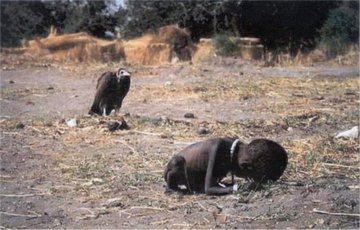
Photograph caused international contrversy, the photographer won
the Pulizer prize, and took his own life shortly after.
The was taken at a UN food depot, the child’s mother was likely
nearby receiving food. The use of a telephoto lens, exaggerates the relationship
between the vulture and the child. Other
people present have said that Carter chased the bird away after the photo was
taken.
Post production – World Press Photo

Photographs of the Holocaust

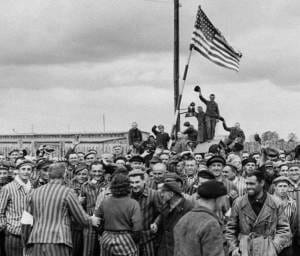
The Holocaust – “this historic event marks the limits of representation”
Photographs taken by Nazi officials, to document construction and
medical experiments in the camp.
Nazi propaganda photographs – silenced worries about the brutality
of the camp.
Images taken by Allied soldiers upon discovery/after liberation – very
heroic, also used as propaganda, somewhat misrepresented the camps.
Photograph’s also taken by German soliders, visiting during
leisure time. ‘Tourist photographs’ – ‘light-hearted’ many of which were found
in wallets of dead German soldiers.
Photographs do not show the acts, buracracy, planning and
decisions behind the camps, just the incident.
Freeze framing makes it impossible for photographs to do justice
to the professional quality of history.
Despite this is signifies something. It’s abstraction lends itself
to becoming a symbol, and can lead to abstract emotive ideas.
IS THE UBIQUITY OF CAMERA
PHONES AND SOCIAL MEDIA MOVING US TOWARDS A FAIRER FORM OF PHOTOGRAPHY?
(Relating to the concentration camps)
“The photographs taken by amateur
photographers were often more convincing than pictures taken by professional photographers
on official commissions… in their amateurishness, the photographs seem to depict
directly the situation that the photographers had experienced. This their own pictures
seem to more truthful than the more composed pictures of professionals.”
JUDITH KEILBACH
In the hour following 9/11 attacks in New York surrounding gift-shops
were sold out of disposable cameras.
“A desire to make real what I could barely understand”
-E. Ann Kaplan
Photographs abstracts reality, in this case makes something
overwhelming, easier to grasp.
Leads to unbiased, less premeditated photographs, the volume of
them creates a variety of. The amateur nature of the photographer, combined with
the nature of disposable cameras/camera phones means that the photographer had
no control over zoom, aperture, film type, or development.
Does this lead to a more honest depiction of an event through
photography.
Social Media as an un-controlled, distribution channel.
Storyful – verification.
Also this talks to Jules Spinatschs methods of remaining distance and attempting to 'photograph everything'
Also this talks to Jules Spinatschs methods of remaining distance and attempting to 'photograph everything'
IS OVERSATURATING DAMAGING PHOTOGRAPHY’S
TRUTH VALUE?
Some argue that truth in photography lies in studying subtleties -
subject poses, gestures, dress, relationships between people – a secret
language, this can transcend the intent of the photographer. Walker Evans -
Farm Security Administration.
Through familiarisation photographs can become devoid of
information, and become symbols, or motifs, rather than something worthy of
critical thought.
As this they may be capable of reinforcing knowledge that already
exists.
Subscribe to:
Posts (Atom)