Tuesday, March 15, 2011

WHAT MAKES A SPACE A HABITAT?


Photographys ability to make us re-evaluate our environment is one of the keys to its success. Throughout the course I have found myself drawn to the photographers that take the ordinary and extract beauty where others see nothing.

Eugene Atget photographed Paris with a no frills style that revealed more about the city because of its honest, non-judgemental approach. He did not adapt scenes to express an opinion, but recorded what was there as a casual observer to create an overview of the city. I am interested in how his pictures focus on the human interventions in a place, but are mostly devoid of people.

Bernd and Hilla Becher photographed industrial buildings and displayed them beside each other, creating a typology for what would be seen as awkward and alien structures. By representing the unique as one of many the strange shape become the norm. This method of photographing different objects using identical photographic techniques to highlight similarities is applicable to my proposal.

Stephen Shore embarked on a cross country trip which he photographically documented. He photographed the beds he slept in, the toilets he used and the fridges where he kept food. This approach captured the human effect on space. Signs of human activity make a space a habitat.

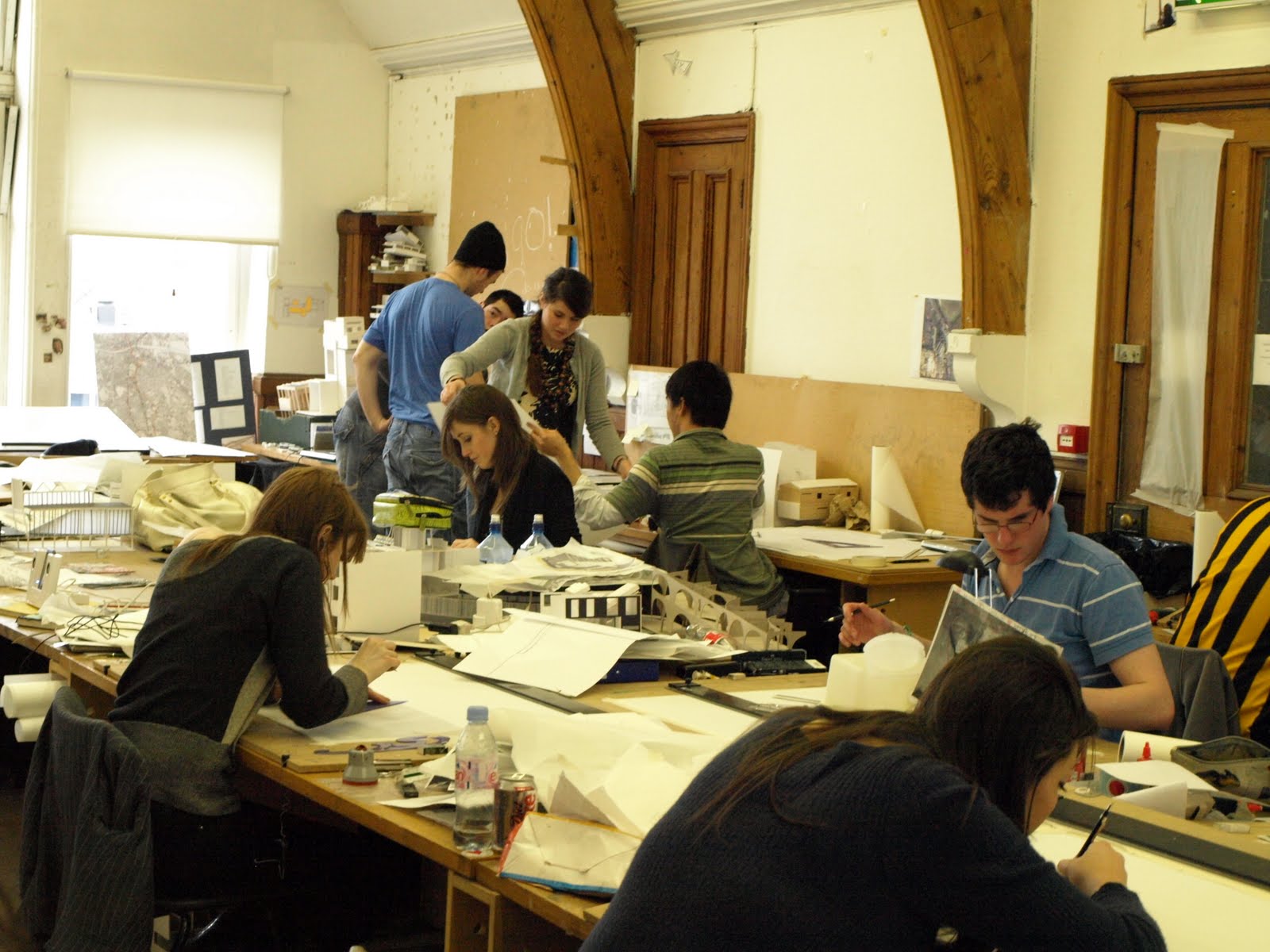
For my project I began to think about habitat. I was drawn to the one space I use most, my workspace. As an architecture student I could spend hours at my drawing board, without realising it I have cultivated a habitat around this 2m x 1m desk. We think of the home as a habitat, we spend a third of our days at work. Our workspace is as personal as out homes. Francis Bacon's studio is now on display in the Hugh Lane Gallery. His workspace had over the years becomes an extension of himself and gives us a deeper understanding of his mind and work. Even in the most sterile of offices stationary, keyboards etc are arranged to the users specific preferences. I want to document a variety of work spaces, particularly desks comparing and contrasting how people personalise them. I want to investigate what makes a space a habitat. By photographing work desks in a documentary style and displaying them in a way that they can be compared I hope to achieve this.


Monday, March 14, 2011

Lewis Baltz; The New Industrial Parks near Irvine, California

West Wall, Unoccupied Industrial Structure, 20 Airway Drive, Costa Mesa.

Lewis Baltz's dispassionate eye neither suggests nor implies a hidden meaning in his photography. He documents fact through vigorous clarity and detail. His documentary collection, 'The New Industrial Parks near Irvine, California' allows the viewer an insight into the changing topography of what was once a natural landscape unscarred by man. Lewis Baltz is an icon of "The New Topographics" a movement of photographers who sought to capture "a man altered landscape" in the seventies. These stark photographs isolate fact and do not seek to imitate.

South Wall, Mazda Motors, 2121 East Main Street, Irvine

Baltz believed in viewing the series as a collective whereby one single photograph did not have precedence over another. This reinforces the idea that the suburban typology was to be read as a whole, its physical reaction with landscape and vice verse. Baltz does not hint at the use of the building nor its habitation and labels all photographs. They are what they are.

East Wall, McGaw Laboratories, 1821 Langley, Costa Mesa

Baltz plays on stark contrasts, barren landscapes and strong geometric planes. Lighting plays an important role, most photographs are devoid of shadow. Reflective surfaces capture the horizon. The skyline blends into the plastered surfaces of the building and photographs are devoid of human occupation. The framed space although truthful in expression becomes almost surreal, devoid of human emotion, perhaps a pun on American suburbia?


East Wall, Western Carpet Mills, 1231 Warner, Tustin


South Wall, H&K Industries, 1611 South Boyd Street, Santa Ana

Posted By; Lisa Halton 140311

Project Proposal_Conor Maguire

Le Corbusier's Unite d'Habitation, 1959 - Rene Burri
O'Donnell + Tuomey's Timeberyard_Stephen Murray

Photography and the Human Habitat

Project Proposal_Conor Maguire

Architectural photographs of today are almost always taken when the building has just been finished and before the clients properly occupy the building. The images can be the culmination of weeks of pre-planning, site work and post production when they are subject to the rigours of photoshop; being edited, cleaned up, stitched or sandwiched. The result is a constructed sleek image demonstrating the key ideas or design principles of the building, something architects rely heavily on when discussing their work.

I’m not criticizing this process but instead what I’m interested in is what happens after the initial burst of excitement when a building is finished. How do people inhabit the building? How does the building change or adapt, expand or contract over its lifetime? How do people make it their own? Alice recently presented a lecture that talked about photographing O’Donnell + Tuomey’s Howth House years after it had been finished. The pictures, untypical of the original shots, showed relatively little of the overall house but focused more on the life of the building at a smaller scale through texture, surface and material. It showed how the owner had made the house her home. This was something I found truly fascinating.

Emmet Scanlon also presented his house at a lecture a few weeks ago. It was interesting because he looked at the house not only from his point of view as the architect but as the homeowner. He showed a number of slides demonstrating the lifecycle of his garden over the course of a year and how it changed from season to season. Architecture and time, be it long-term or short-term, is something that we talk about all the time but rarely document. Even we consider a building finished when in reality it’s only at the beginning of its life-cycle, an empty shell ready to be inhabitted.

My proposal is to curate an exhibition where architecture is represented in the everyday, where we see a home in a different manner and a different time than we architects usually see them, where we look at a building at the scale of a person rather than the scale of a site. Rem Koolhaas made and released a film recently where he examines the famous “lift house” he designed in Bordeaux from the point of view of the cleaner (possibly inspired form the famous shot of the cleaner in Mies van der Rohe’s Barcelona Pavilion), at a time after the owner of the house had passed away. It sets up an interesting (and funny) play between time and scale and thus is a good reference for what I want to do.

Houselife - Rem Koolhaas

Berenice Abbott; Changing New York


Photograph of Berenice Abbott (1898 - 1991) taken by Hank O'Neal in his downtown studio, New York, 1979

Berenice Abbott's anxious energy led her to the playground of the avant-garde artists, Greenwich Village, New York from her home state of Ohio in 1918. She pursued journalism and later became enamoured with the world of sculpture and poetry, possibly due to her association with Man Ray, Eugene o'Neill and the poet and critic Sadakichi Hartmann. It was not long before the vulgarity of capitalism slurried the streets of their bohemian haven and so Abbott left for Paris along with her dadaist counterparts.


Abbott studied sculpture in both Paris and Berlin however it was not until 1923, due to a chance encounter with Man Ray, was Abbott to cultivate her future as a successful photographer. Ray, requiring an assistant with no experience and who would "do what they were told to" hired Abbott in his studio in Montpernasse, Paris. Abbott flourished in the field and to "be done" by Man Ray or Bernice Abbott was a passport to prestige.


Man Ray introduced Abbott to the work of Eugene Adget, a documentary style photographer who had captured the "sobering effects of the depression" in Paris. He became Abbott's unwitting mentor, "Adget's photographs somehow spelled photography to me". On his death in 1927 Abbott aquired Adget's entire collection of plate glass negatives and a total of 7,800 prints for fear they would be lost. Adget's ability to capture the complexities of human emotion through the banal settings of the Parisian streetscape aroused Abbott's psyche so much so that she sought "to do in Manhattan what Adget did in Paris" on her return to New York in 1929.

Requiring the inherent clarity that transposed onto Adget's prints Abbott bought an 8X10" large format camera. Dispelling her peer, Pierre Mac Orlan's definition of photography as 'plastic' and 'documentary' Abbott sought to emulate the "feeling lurking beneath the the surface of ordinary experience".


Abbott studied the photographs of Mathew Brady who created a photographic record of "a turning point in American history". Abbott failed to get financial support for six years until the Federal Arts Project hired her in 1935. This allowed Abbott to photograph New York's physical ascendancy and "capture disorientating sensations of city life". 'Changing New York', Abbott's masterful collection of New York City life was finally exhibited on October 20th 1937. 111 prints mounted in a series from one to four were exhibited for six weeks due to demand. Her collection along with Walker Evans for the International Exposition of Photography at New York Grand Central Palace for the FSA 'How American People live' was seen as "the most exciting and important photographs". Changing New York is the definitive anthology of Abbotts legacy as a photographer who captured human identity through the poetry of contrasts.


My photographs are to be documentary as well as artistic,

the original plan, this means that they will have elements of

formal organization and style, they will use devices of abstract

art if these devices best fit the given subject, they will aim at

realism, but not at the cost of sacrificing all esthetics's factors.

They will tell facts...but these facts will be set forth as organic

parts of the whole picture as living and functioning details of

the entire complex social scene


Ref: Berenice Abbott; Changing New York Bonnie Yochelson, New Press 1997


Posted By; Lisa Halton 140311


Friday, March 11, 2011

Stephen Shore

Stephen Shore

Stephen Shore is best known for his pioneering use of colour in art photography, at a time where colour was only used by the press. His work generally documents seemingly banal scenes taken while on the road exploring North American culture.

From a young age Shore showed a passion for photography. By age 9 he owned his first 35mm camera. 2 years later he was given Walker Evans' American Photographs and by age 16 he was selling prints to Edward Steichen, then curator of photography at the Museum of Modern Art (MoMA). He never went to University, instead started spending time at the factory with Andy Warhol in New York where he gained an interest in photographing everyday culture. There he learned of the benefits of working consistently in series, something that translated into viewing his journeys as photographic sequences.

Shore’s early work in American Surfaces consists of quick point and shoot pictures taken by a 35mm Rollei, generally on small Kodak size paper (something which was very untypical for art photographers of the time) and gave an account of his activities as a traveller. They were spontaneous and un-mediated documenting everything from hotel rooms to the pancakes he would have for breakfast.

In the follow up publication Uncommon places we notice a shift in style. His work becomes more deliberate, calculated and precise. Shore puts this down to a conversation with his friend and curator of MoMA John Szarkowski in 1973 where he questioned the viewfiender of his 35mm camera. Shore took this as a criticism of his framing of photographs. He began using 4x5 and 8x10 format cameras which were associated with press photography of the time and generally required a tripod. He describes being “fascinated with the subconscious or conscious decisions that go into a photograph that working with a view camera would produce”. This led to a change of subject from people and moving objects to scenes that lent themselves to an 8x10 plate camera like buildings, empty streetscapes and carparks.

Thursday, March 10, 2011

THOMAS STRUTH


Struth trained at the Dusseldorf Academy from 1973-1980. His early works consisted of huge black and white shots os streets in Japan, Europe and America. Through photographs he attempts to show the relationship between people and their modern day environment


In the mid-1980s Struth added a new dimension to his work when he started to produce family portraits. This was after a meeting with psychoanalyst Ingo Hartmann. These works attempt to show the underlying social dynamics within a seemingly still photograph. His photos are usually praised for their clinical objectivity. He said that a photograph "has a clear language, one that speaks openly not only about its subjects ... but also very much about the attitude of the photographer toward these things. In this regard, a photograph is always objective."


Trained as a painter he even seems to imply that the best photography aspires to the condition of painting. Critics usually contrast these scenes of geometric serenity with the passionate cinematic photographs of Andreas Gursky. Unlike Struth, Gursky clearly believes that photography has surpassed and displaced painting


Like Atget his pictures are without people. Atget populated his pictures with the cities character in the form of objects and compositions. Struth's pictures, with their balance and perfection captures the essence of the city in a different way. The Crosby Street, New York (SoHo) (1978) and Sommerstrasse, Düsseldorf (1980) make these two very different cities look identical.


This is why, in Struth's museum photographs, the figures in the paintings seem uncannily more real than the actual, living people looking at them. In a photograph of people standing before a Seurat painting the painting itself is active, not the people staring at it. We recall that Seurat based his paintings on photographic principles. His famous photograph of The Chicago Art Institute has a balance that makes the frame almost become like a window on the wall, and the woman viewing an active member of the painting.


Walker Evans


Walker Evans

Despite rejecting the claim of “fine artist” like his French counterpart Eugene Atget, Walker Evans is widely viewed as the pioneer of the photographic art in America. With his seminal work “Ameriacn photographs” he became the first Photographer to have a standalone show in the Museum of Modern Art (MOMA) in New York. He is renowned for his documentary almost anti Photographic Style which is summed up by his mentor and friend Lincoln Kirstein when he says “Photography in itself almost probably does not interest him”

Evans always dreamed of being a writer and was heavily influenced by the work of T.S Elliot and Ernst Hemmingway which is evident in the dramatic anti-romantic nature of his work. Coming from a wealthy background, being the son of an Advertising Executive allowed Evans

to travel to Paris in his early 20’s where he learned from the photography of Eugene Atget. Returning to America after a year in Paris, armed with a new found French intellectualism and in the words of Kirstein began photographing “the contemporary civilisation of Eastern America and its dependencies as Atget gave gave us in Paris before the war” with shots of clear, hideous and beautiful detail.

American Photographs although lacking obvious continuity and physically existing as separate prints can be read as a series or collection of statements deriving from and presenting a consistent attitude. The opening picture of a photo-booth proclaims "Photos" and points us in ironically in the direction of what’s to follow. The photographs are almost always shot front on, with a rigorous directness. His eye is open and visible. There is no need to dramatize the material. It is already intensely dramatic.

The relationship of man and machinery in industrial America is a theme that is consistent throughout. Evans is obsessed with mans reliance on the machine and the obvious scarring of the landscape that results. He is concerned with the psychology of the people who use them. He shoots Architecture with a view to looking at the people behind it, those who use the building or those who built them. In the barbers shop picture he does the opposite simply shooting two empty chairs suggesting instead an absence of people.

Evans pictures to my mind have a humorous aspect to them. He sarcastically questions “good taste” architecture of the time, mimicking post revolutionary New England and colonial architecture moulded with stucco instead of being sculpted from stone. Symbolic fragments like that of the cracked iron cast moulding or pressed tin Corinthian capitals demonstrate this.


SPACE FRAMED: PHOTOGRAPHY AND THE HUMAN HABITAT

Project Proposal

Michael Hayes

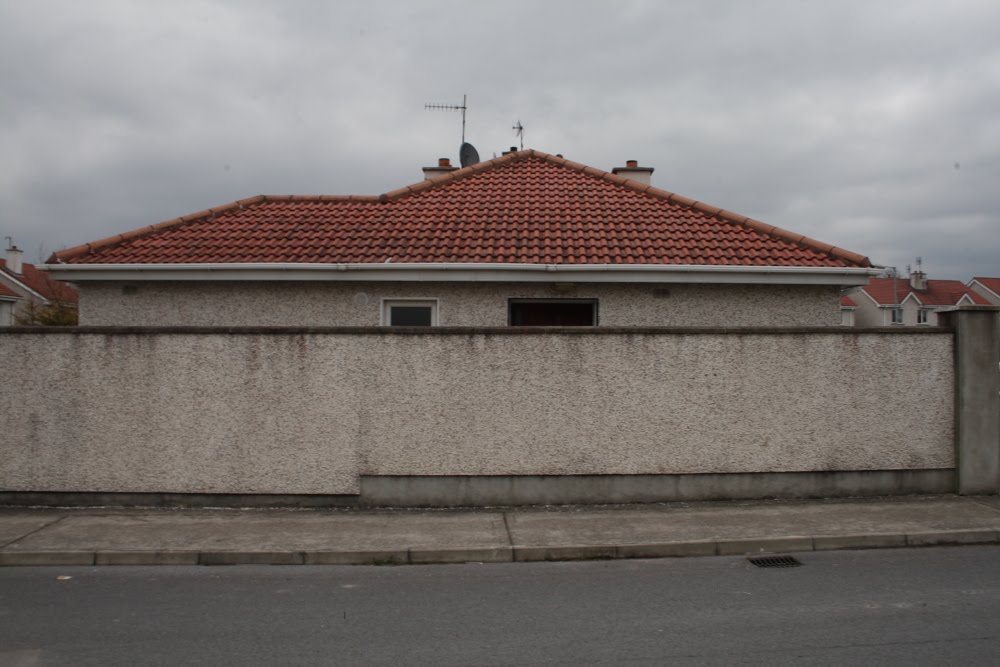
My proposal is to make a project concerned with contemporary patterns of habitation in the Irish landscape i.e. The housing estate.

During the course of this seminar I've found myself naturally drawn to the documentary style of Walker Evans and the survey-like work of Robert Adams. While it remains to be seen whether their approach to photography is appropriate to this project, I think it's a suitable starting point.

For me the housing estate is a subject that encompasses many of the topics we've already discussed such as the observation of the ordinary, the comparison of typologies, and man'scolonisation of the landscape. However, at this point, I'm probably most interested in capturing human occupancy at a smaller scale; how individuals' attempt to live within the boundaries handed to them, whether its just leaving a pair of shoes outside the front door or sitting on a garden wall having a chat.

In terms of presentation, I feel that a book/catalogue represents too unified an object given the subject matter. Therefore I propose (for now at least) that the final images will be presented as individual postcards on a typical, revolving newsagent's stand. There idea here would be that each image, though repeated many times, becomes an object itself which may transfer ownership from exhibition to audience and thereby leading to further fragmentation and decontextualisation.

Below are a series of preparatory images (taken from our studio project in cahir) that just show a number of different approaches to the subject and which might give a better idea of what I'm thinking of...